Review2 min readDated by the event covered
Server CPUs in 2026: Xeon 6+ Clearwater Forest against EPYC Venice
Intel’s 288-core Xeon 6+ fits existing Xeon 6 sockets; AMD’s 256-core EPYC Venice needs a new SP7 platform and ships from Q4. Turin and Granite Rapids remain the volume choice for now.
InTechnologies
cpu · intel · amd · servers
Intel launched its Xeon 6+ processors, code-named Clearwater Forest, on 1 June 2026. They are its first data-centre CPUs with compute tiles built on the Intel 18A process. Intel’s specification page for the flagship Xeon 6990E+ lists 288 efficient cores with one thread each, 576 MB of cache, a 2.2 GHz base clock, a 450 W TDP, 12 channels of DDR5-8000, 96 PCIe 5.0 lanes and dual-socket support, at a recommended customer price of $14,995. It uses socket FCLGA7529, the same socket as existing Xeon 6 platforms. Intel claims about 30% better per-thread performance than AMD’s 192-core EPYC 9965; that is Intel’s own comparison.
Intel had previewed the chip at Mobile World Congress in March, where Hardware Busters reported preliminary results from testing with Ericsson: 30% higher overall performance than a dual-socket, 288-core Xeon 6780E Sierra Forest system and more than 60% better performance per watt. Sixty-four of the 96 PCIe lanes support CXL 2.0.
Venice raises the ceiling
AMD answered at its Advancing AI event on 22 July 2026 with the EPYC 9006 series, code-named Venice. According to VRLA Tech’s summary of the launch, the top EPYC 9996 has 256 Zen 6c cores and 512 threads, with compute dies on TSMC’s 2 nm process. The new SP7 platform brings 16 channels of DDR5 (8,000 MT/s RDIMMs, 12,800 MT/s MRDIMMs), 128 lanes of PCIe 6.0 in single-socket systems, CXL 3.1 and TDPs up to 600 W. SP7 systems are expected from the fourth quarter of 2026, and a mainstream SP8 platform with eight memory channels at 350–400 W follows in the first half of 2027. AMD’s performance claims, including up to 3.7 times the Xeon 6980P in NGINX, are its own, and AMD has not yet published a full SKU table or pricing.
For the next two or three quarters, most orders will still be for the platforms already in volume: EPYC 9005 Turin on SP5 and Xeon 6 Granite Rapids, whose 6900P series tops out at 128 performance cores in the Xeon 6980P. Both are mature, widely validated and supported by every major OEM.
What it means for buyers
Separate drop-in upgrades from platform changes. Xeon 6+ shares its socket with current Xeon 6 servers, so ask the OEM whether a given chassis and BIOS are qualified for it. Venice needs a new SP7 or SP8 motherboard, so it is a new server purchase rather than an upgrade for SP5 fleets. Count memory channels as a cost item: a 16-channel socket populated at one DIMM per channel needs a third more modules than a 12-channel one, at a time of high DDR5 prices. Check per-core software licensing before choosing a 256- or 288-core part, since a dense CPU can raise licence costs faster than it lowers hardware costs. Treat all vendor benchmarks as claims, and ask for a proof-of-concept or independent results on your own workload. InTechnologies can quote both Turin and Granite Rapids platforms with current lead times.
Sources
- 01Intel Xeon 6990E+ processor (product specifications)2026-10-16
- 02Intel Xeon 6+ Clearwater Forest puts 18A in the data center with up to 288 cores, 576 MB of L3 cache2026-06-01
- 03Intel’s 288-Core 18A Xeon Targets 6G and Edge AI2026-03-04
- 04AMD EPYC 9006 Venice: Zen 6 Server CPUs Arrive with Up to 256 Cores on TSMC 2nm2026-07-23
Related in the catalog
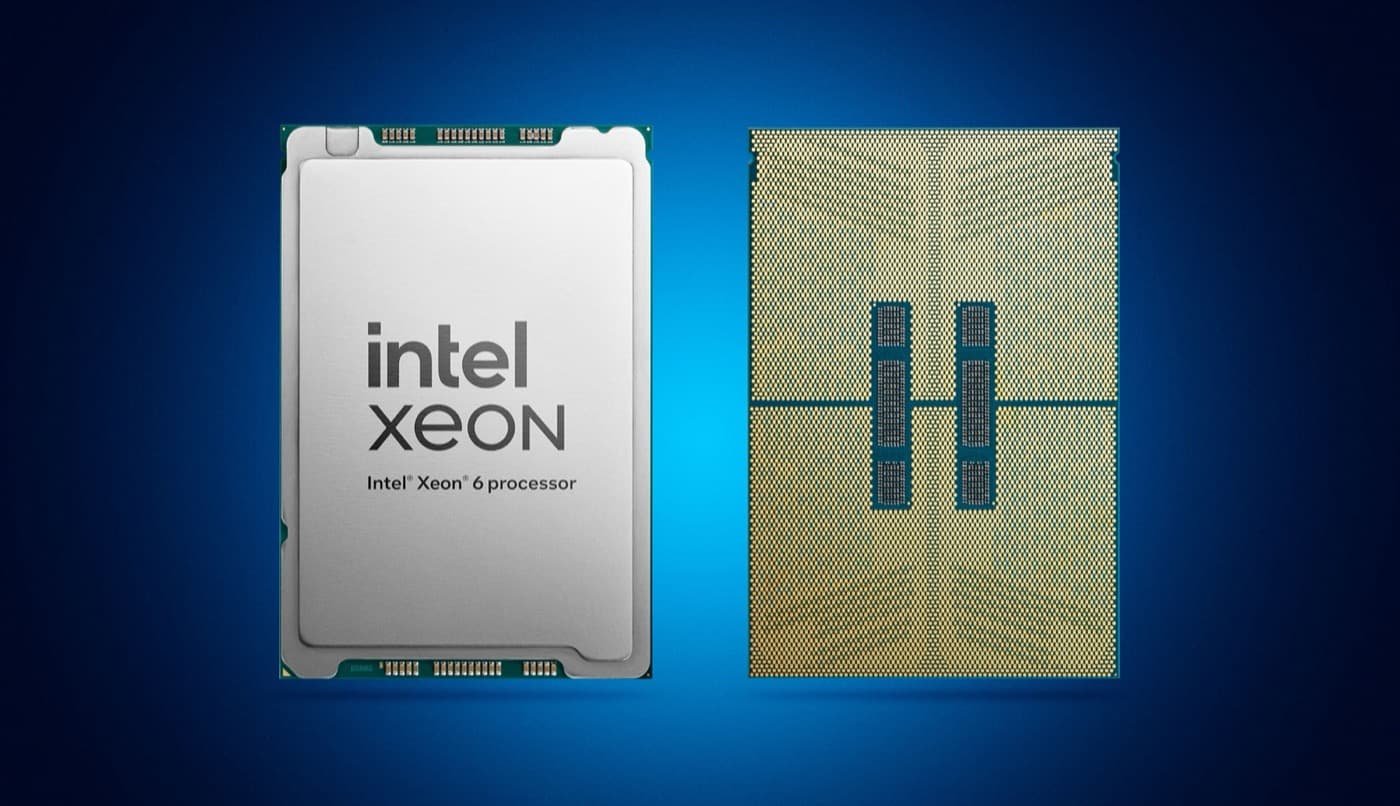
Intel Xeon 6980P Processor (128 cores, 504 MB cache)
128-core Granite Rapids Xeon 6 with 504 MB cache, 12-channel MRDIMM support and 96 PCIe 5.0 lanes
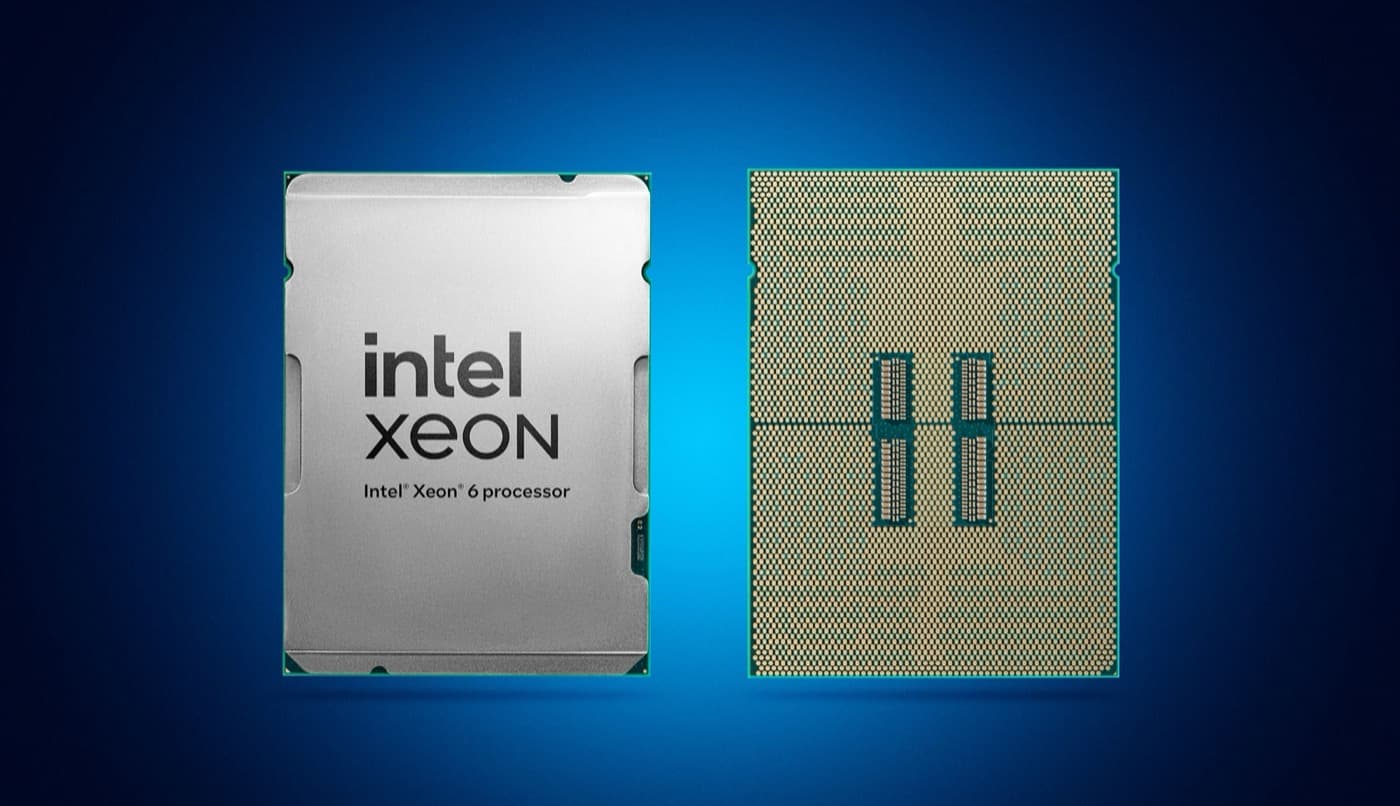
Intel Xeon 6780E Processor (144 E-cores, 108 MB cache)
144 Efficient-core Sierra Forest Xeon 6 at 330 W for cloud-native and scale-out workloads
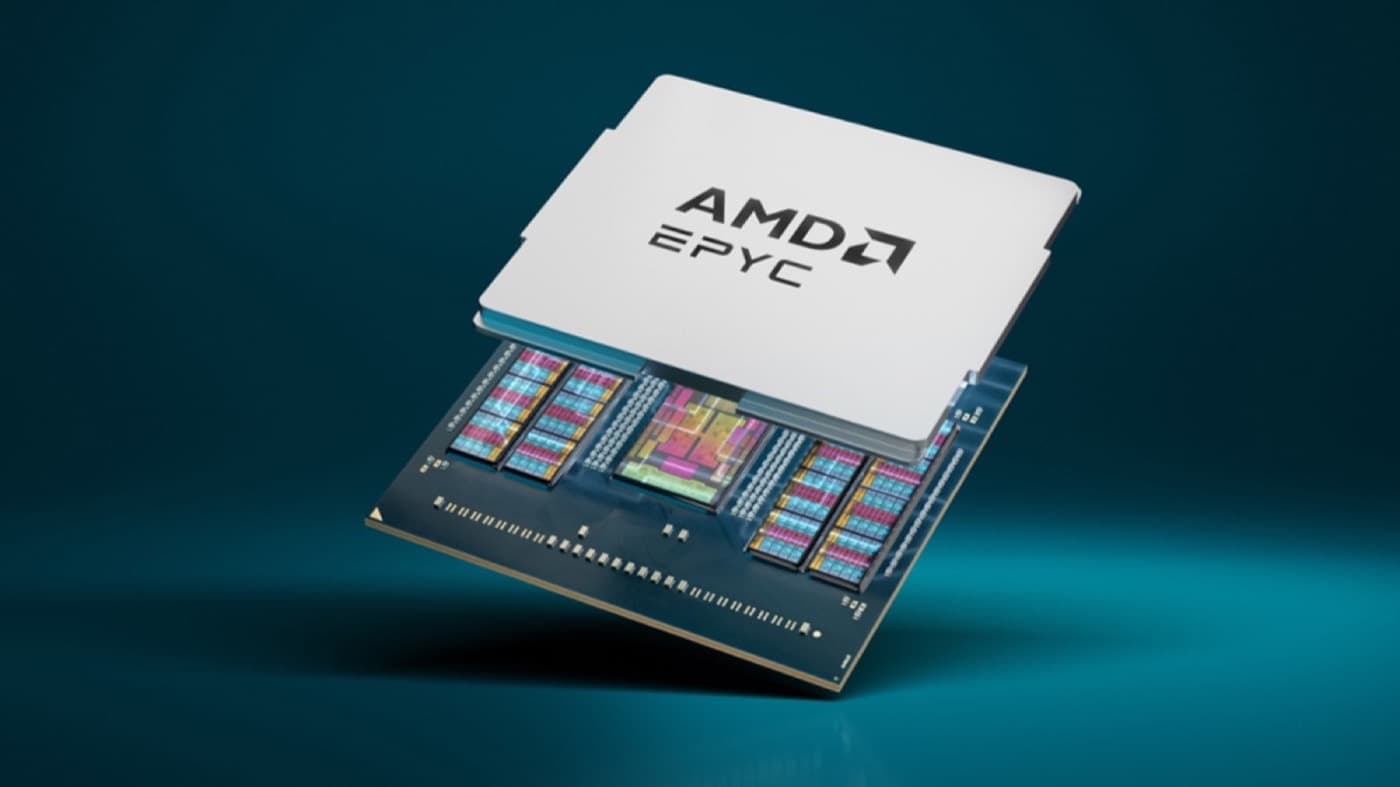
AMD EPYC 9965 Processor (192 cores, Zen 5c)
192-core Zen 5c EPYC with 384 threads, 384 MB L3 and 614 GB/s memory bandwidth per socket