Guide6 min readDated by the event covered
HGX vs DGX: what the difference means for an NVIDIA GPU server order
HGX is NVIDIA’s eight-GPU baseboard that server makers build around; DGX is NVIDIA’s own complete system. Same GPUs and NVLink, different CPUs, cooling, software and support.
InTechnologies
gpu · nvidia · servers · data-centre
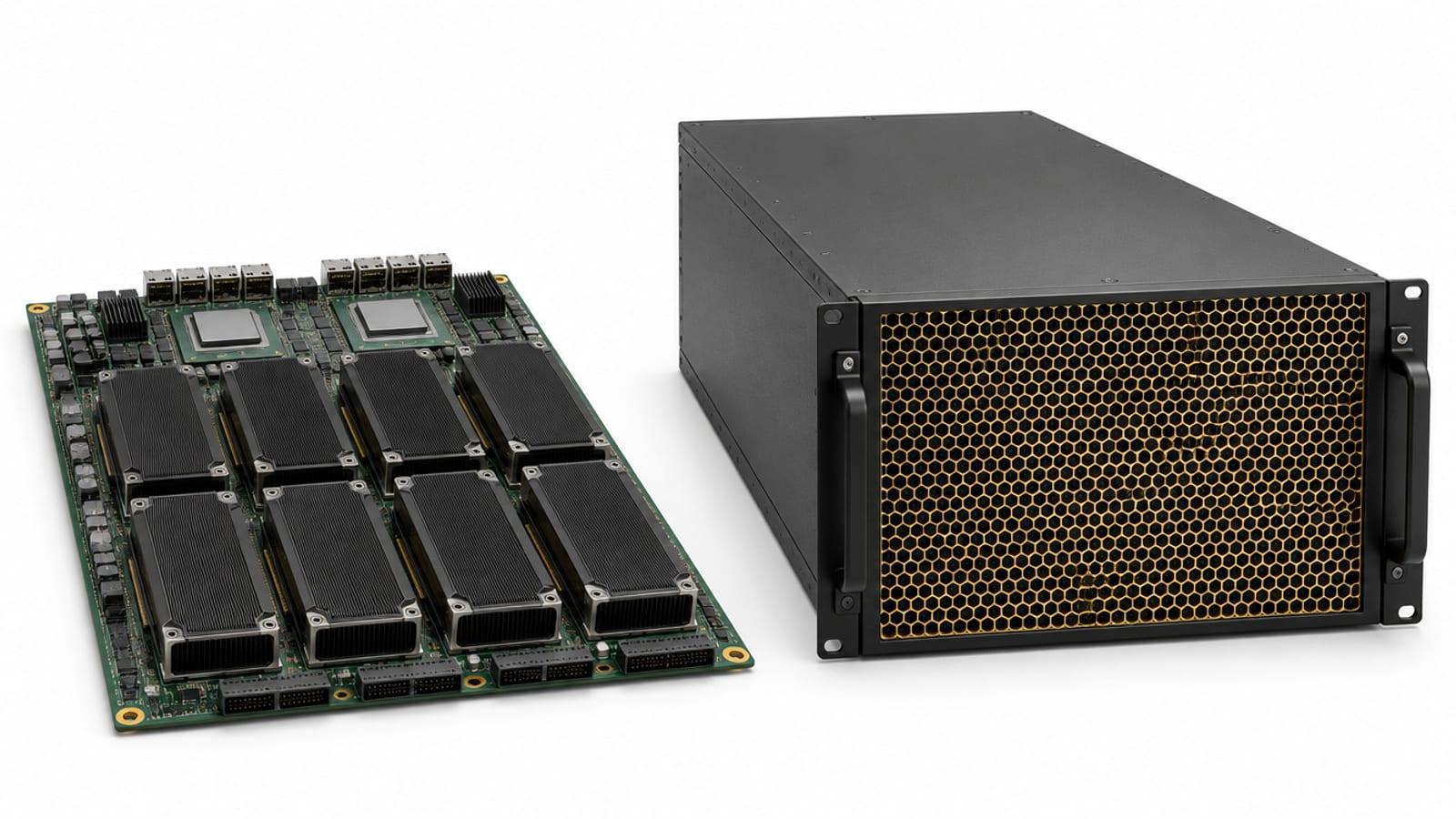
Buyers who ask for “an H200 server” or “a B300 system” often receive quotes for two different things under similar names. One is a DGX system, built, branded and supported by NVIDIA. The other is a server from Supermicro, Dell, HPE, Lenovo, GIGABYTE, ASUS or another manufacturer, built around an NVIDIA HGX board. The GPUs inside are the same; almost everything around them is not. This guide explains where the line falls and how to choose.
What HGX is
NVIDIA describes HGX as a single baseboard carrying eight SXM GPUs, currently Blackwell, Blackwell Ultra or Rubin, linked to each other through NVLink Switch chips on the board. NVIDIA supplies the board; the server maker designs the system around it: chassis, CPUs, memory, storage, network cards, power and cooling. When NVIDIA announced Blackwell Ultra on 18 March 2025, it said Cisco, Dell Technologies, HPE, Lenovo and Supermicro were expected to deliver servers based on it, in addition to Aivres, ASRock Rack, ASUS, Eviden, Foxconn, GIGABYTE, Inventec, Pegatron, QCT, Wistron and Wiwynn. That release called the eight-GPU board HGX B300 NVL16; NVIDIA’s HGX page now lists it simply as HGX B300, which is the name most OEM quotes use.
According to the HGX page, HGX B200 and HGX B300 both give each GPU 1.8 TB/s of NVLink bandwidth, 14.4 TB/s in total, through fifth-generation NVLink Switch. HGX B300 carries 2.1 TB of GPU memory against 1.4 TB on HGX B200, delivers 108 PFLOPS of dense FP4 against 72 PFLOPS, and is rated for 1.6 TB/s of networking bandwidth against 0.8 TB/s; FP8 is listed at 72 PFLOPS for both. For the Hopper generation, NVIDIA’s H200 page lists the server options for H200 SXM as HGX H200 partner and NVIDIA-Certified Systems with four or eight GPUs.
What DGX is
DGX is NVIDIA’s own complete server built on the same eight-GPU design, sold with a fixed configuration, NVIDIA’s DGX OS and NVIDIA support. NVIDIA’s published specifications for the current eight-GPU models:
- DGX H100 and DGX H200: eight GPUs with 640 GB (H100) or 1,128 GB (H200) of total GPU memory, two 56-core Intel Xeon 8480C CPUs, 2 TB of system memory, eight single-port ConnectX-7 InfiniBand cards for the cluster network, eight 3.84 TB U.2 NVMe drives for data cache, 8U, 10.2 kW maximum.
- DGX B200: eight Blackwell GPUs with 1,440 GB of total memory and 64 TB/s of HBM3e bandwidth, two Intel Xeon Platinum 8570 CPUs with 112 cores in total, 2 TB of memory configurable to 4 TB, eight single-port ConnectX-7 VPI cards plus two dual-port BlueField-3 DPUs, eight 3.84 TB U.2 NVMe drives, 10 RU, about 14.3 kW maximum.
- DGX B300: eight Blackwell Ultra SXM GPUs with 2.1 TB of total memory, Intel Xeon 6776P processors, eight single-port ConnectX-8 VPI cards at up to 800 Gb/s plus two dual-port BlueField-3 DPUs, eight 3.84 TB E1.S NVMe drives, 10U, about 14 kW.
The DGX B200 and DGX B300 pages list DGX OS as included, NVIDIA AI Enterprise and NVIDIA Mission Control as recommended rather than included, and three years of business-standard support. DGX systems are also the building block of DGX SuperPOD, which NVIDIA describes as a turnkey AI supercomputer with enterprise-grade cluster and workload management and NVIDIA Enterprise Services for support and professional services. Buying DGX means the node, the cluster layout and the software stack follow a design NVIDIA has already validated and stands behind.
What is identical and what differs
The GPU silicon, the GPU memory per board and the NVLink and NVSwitch topology are the same. A workload that fits on eight B200 GPUs sees the same NVLink fabric in an OEM HGX B200 server as in a DGX B200, so performance inside one node is set by the GPUs, not by the badge. The differences are in everything around the board:
- CPU and memory. DGX fixes the processor, which is Intel Xeon in the current DGX generations. OEM servers offer choices: Supermicro’s AS-4126GS-NB3RT-LCC, for example, pairs HGX B300 with dual AMD EPYC 9005 or 9004 processors and up to 6 TB of DDR5 across 24 DIMM slots, while its SYS-822GS-NB3RT uses dual Intel Xeon 6700-series processors with up to 8 TB across 32 slots.
- Cooling and density. DGX B200 and DGX B300 are 10U systems. OEMs offer both air and liquid cooling: Supermicro’s air-cooled HGX B300 server is 8U with six 6,600 W power supplies, while its liquid-cooled AS-4126GS-NB3RT-LCC fits the same board into 4U using direct-to-chip cold plates and four 6,600 W supplies, which needs a facility with liquid-cooling infrastructure.
- Network and storage. DGX ships with a defined set of ConnectX and BlueField adapters and NVMe drives. In an HGX server the buyer chooses the NIC generation, the number and type of drives and the management network.
- Software and licences. DGX OS comes with a DGX system. NVIDIA AI Enterprise is listed as recommended for DGX and as an add-on for H200 SXM, so do not assume it is bundled on either path; ask for it as a separate line with its term.
- Support. DGX is supported by NVIDIA directly. An HGX server is covered by the manufacturer’s warranty and service, and the OEM handles escalation of GPU-board faults.
- Price and lead time. DGX is a single fixed configuration, so it is simple to compare but leaves no room to trade components. OEM configurations vary, and availability differs between manufacturers and between air- and liquid-cooled variants of the same board.
When each makes sense
DGX fits buyers who want one vendor responsible for the node and the software, plan to build towards a SuperPOD design, or lack the in-house team to validate a custom configuration. It also suits organisations that want to run NVIDIA’s own cluster management stack as delivered.
An HGX server from an OEM fits buyers who already run that vendor’s servers and management tools, need AMD processors or more system memory than DGX offers, want liquid cooling for a dense rack, prefer a particular NIC or storage layout, or need local on-site service from a manufacturer with a presence in their country.
Generations at a glance
- Hopper: H100 and H200 SXM with fourth-generation NVLink at 900 GB/s per GPU. DGX H100 and DGX H200 are 8U; HGX H200 servers come from partners in four- and eight-GPU versions.
- Blackwell: B200 with 1.8 TB/s of NVLink per GPU and 1.4 TB of memory per eight-GPU board. Sold as DGX B200 and as OEM HGX B200 servers.
- Blackwell Ultra: B300 with 2.1 TB per board and double the networking bandwidth of HGX B200. Sold as DGX B300 and as OEM HGX B300 servers.
- Rubin: NVIDIA’s HGX page already lists HGX Rubin NVL8 with 2 TB of HBM4 and sixth-generation NVLink; DGX SuperPOD is offered with DGX Rubin NVL8. Confirm availability dates before planning around it.
Data-centre GPUs are subject to US export controls. InTechnologies supplies DGX systems and HGX servers through licensed partners, and every order goes through end-user verification.
What to specify in a request
- DGX or OEM HGX, or both for comparison, and if OEM, any preferred manufacturers.
- GPU generation and board: HGX H200, HGX B200 or HGX B300, and the number of nodes.
- CPU vendor and minimum core count, system memory size, and boot and data drive configuration.
- Cluster network: InfiniBand or Ethernet, NIC generation and port speed, and whether BlueField DPUs are required.
- Cooling: air or direct-to-chip liquid, rack power available per rack, and rack unit budget.
- Software: DGX OS or another operating system, and whether NVIDIA AI Enterprise or Mission Control licences should be quoted, with their term.
- Support level and duration, on-site service location, and the end-user details needed for export compliance.
Sources
- 01NVIDIA HGX Platform2026-11-10
- 02NVIDIA DGX B3002026-11-10
- 03NVIDIA DGX B2002026-11-10
- 04Introduction to NVIDIA DGX H100/H200 Systems (DGX H100/H200 User Guide)2026-11-10
- 05NVIDIA DGX SuperPOD2026-11-10
- 06NVIDIA Blackwell Ultra AI Factory Platform Paves Way for Age of AI Reasoning2025-03-18
- 07Supermicro AS -4126GS-NB3RT-LCC | 4U GPU Server2026-11-10
- 08Supermicro SYS-822GS-NB3RT | 8U GPU Server2026-11-10
Related in the catalog
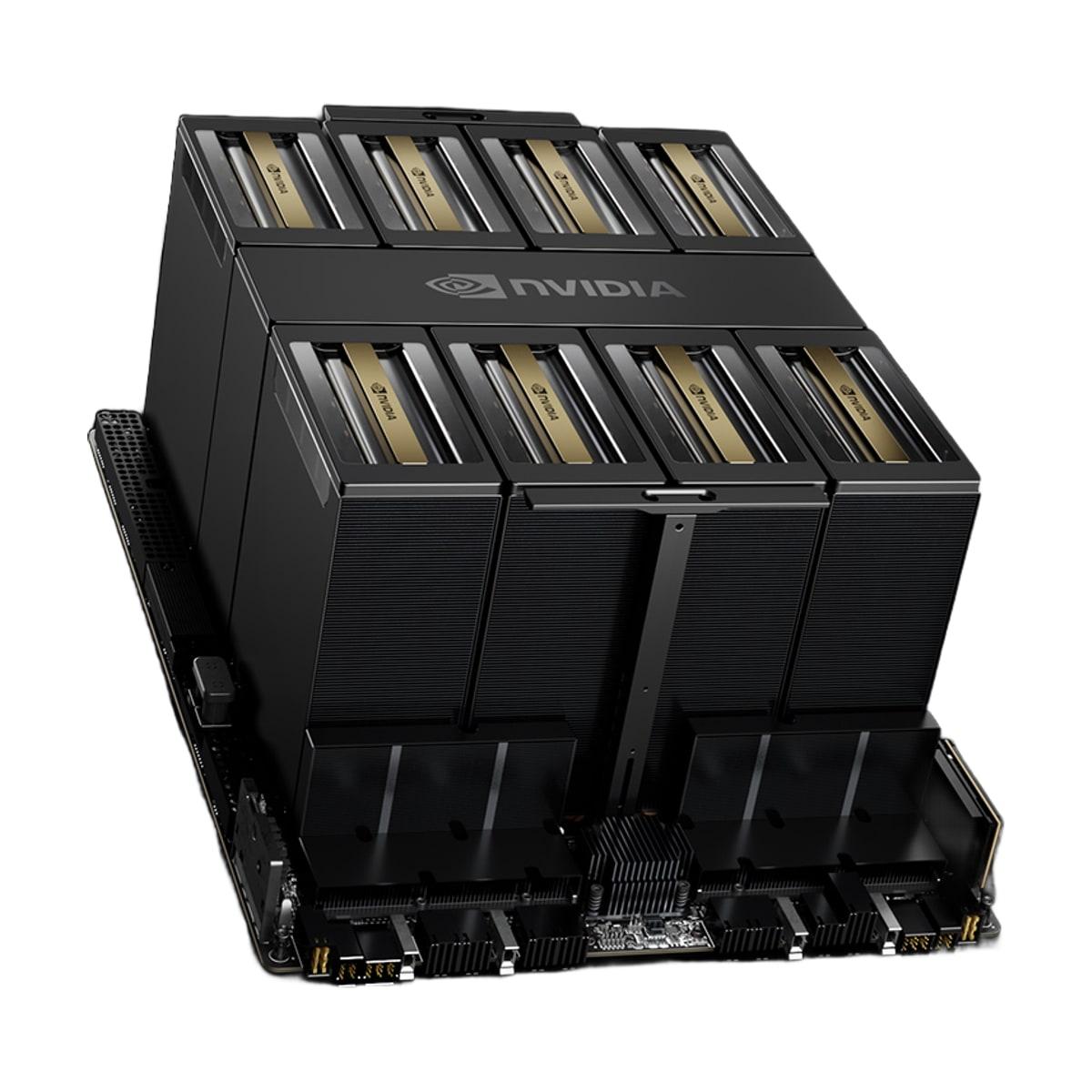
NVIDIA HGX B200 8-GPU Platform
Eight Blackwell GPUs with 1.4 TB of HBM3e for large-scale AI training and inference
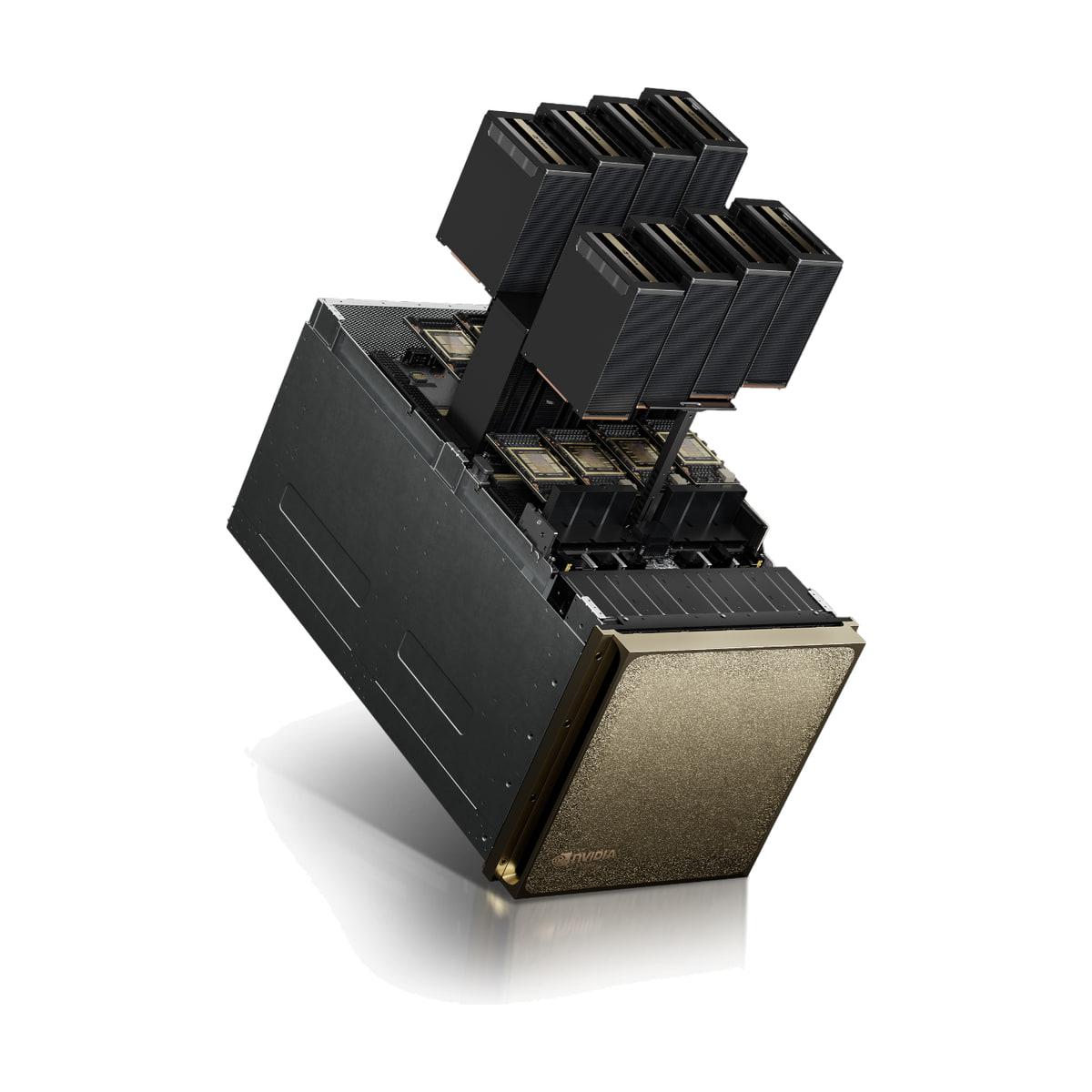
NVIDIA DGX B200 System
Turnkey 10U AI system with eight Blackwell GPUs, 1.4 TB HBM3e and 72 PFLOPS FP8 training
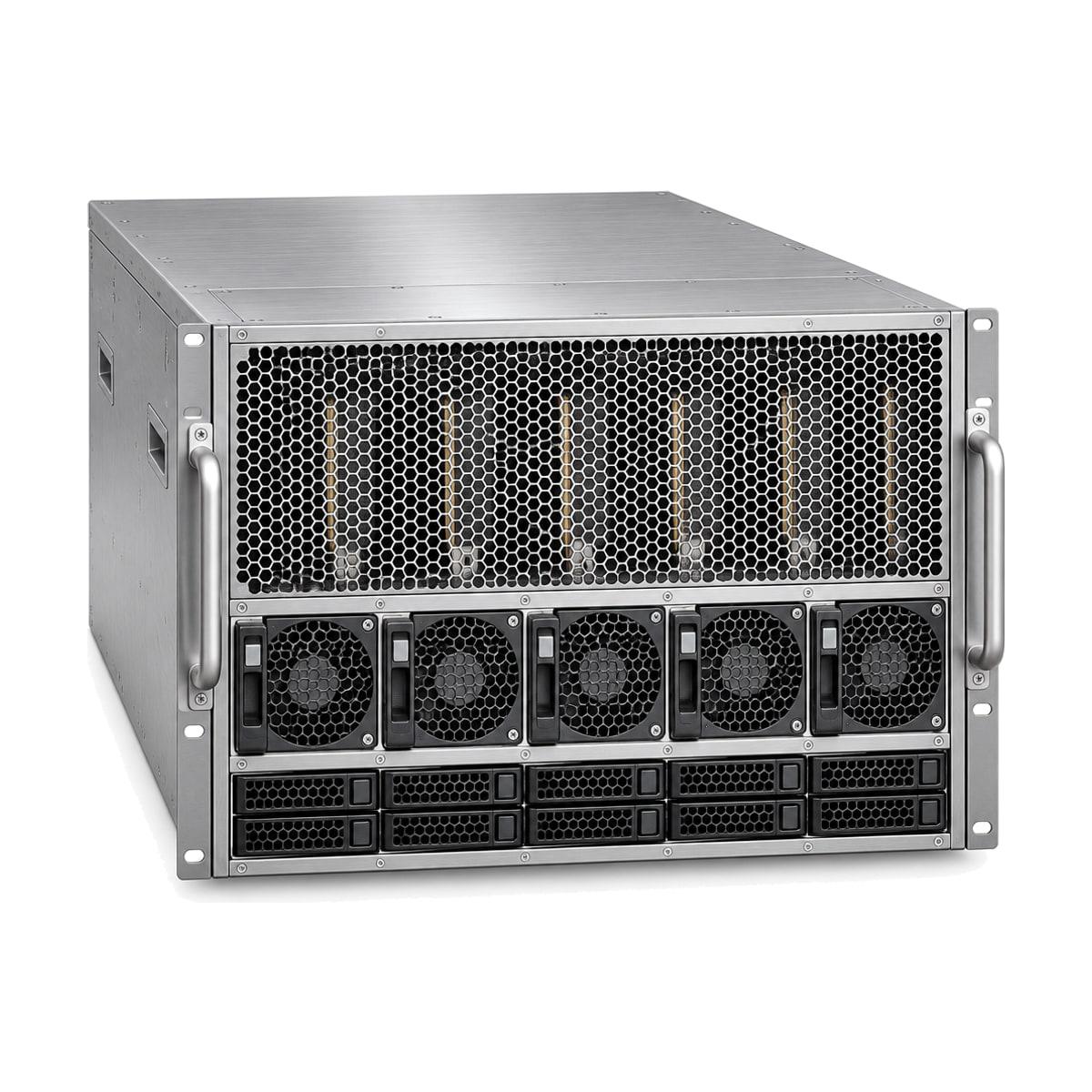
NVIDIA HGX H200 8-GPU Server
Eight H200 SXM GPUs with 141 GB HBM3e each on NVLink; chassis and configuration agreed per order
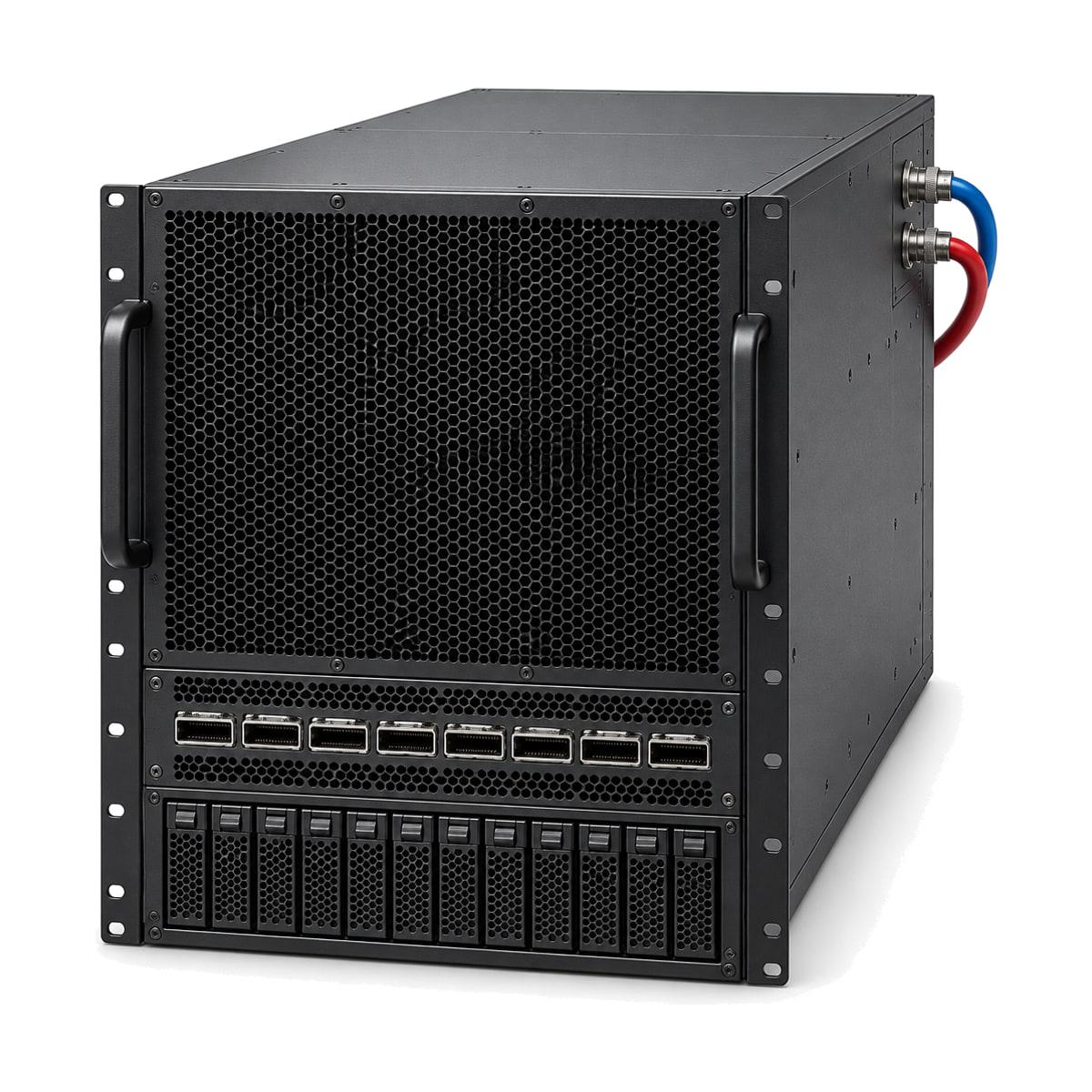
NVIDIA HGX B300 8-GPU Server
Eight Blackwell Ultra SXM GPUs with 2.1 TB HBM3e on NVLink 5; chassis and configuration agreed per order