Guide2 min readDated by the event covered
Buying refurbished data-centre GPUs: A100 and H100 pulls in 2026
Fleet refreshes to Blackwell are putting A100 and H100 hardware into the secondary market. How used, refurbished and pulled units differ, and what to check on warranty, firmware and testing.
InTechnologies
guide · gpu · servers · supply-chain
On 17 July 2026 The Compute Exchange, a marketplace for reserved GPU capacity, opened a separate marketplace for used and refurbished NVIDIA H100 and A100 GPUs, SiliconANGLE reported. Buyers submit requests and are matched with suppliers, with requests ranging from hundreds to tens of thousands of GPUs. It is one sign that the secondary market for data-centre GPUs has become a regular procurement channel rather than an occasional source of bargains.
The supply comes mainly from fleet refreshes. A Hashrate Index analysis published on 8 April 2026 identified hyperscalers retiring Hopper and Ampere fleets as the main source, followed by enterprises consolidating or ending AI projects, with ITAD firms and resellers in between. It cited visible A100 listings from about $7,800 for a 40 GB refurbished card to about $18,900 for an 80 GB PCIe card, and used eight-GPU H100 servers at roughly $150,000 to $180,000. The UK reseller Servnet gave indicative ranges in June of $12,000 to $22,000 for used H100 cards and $21,000 to $34,000 for refurbished ones. These are listing and vendor figures, they differ between sources, and Servnet itself advises confirming prices on the day.
Used, refurbished and pulled
The words matter. Hashrate Index describes refurbished units as tested and certified, sometimes with a warranty, while used units are typically sold as-is. Servnet lists refurbished hardware as warranted through an ITAD provider and used hardware as often having no warranty. Pulls are GPUs or baseboards removed from working servers; SXM modules need a compatible HGX baseboard, so a pulled module is only useful with the right board, and Hashrate Index notes that partial systems such as eight-GPU A100 baseboards trade through informal channels.
Hidden costs can erase the saving. Hashrate Index points out that memory and storage in older servers often need replacing, and those components have become more expensive. Firmware is the other caveat: a GPU or baseboard pulled from one OEM platform may carry firmware that differs from what another server’s BIOS and management controller expect, so compatibility should be confirmed before purchase rather than discovered on installation.
What it means for buyers
Specify exactly what you are buying: GPU model and memory, SXM or PCIe, and whether it comes as a loose card, a baseboard or a complete server. Ask for serial numbers before payment so you can check NVIDIA or OEM warranty status, and for firmware versions, burn-in or health reports and the seller’s own warranty in writing. Prefer sellers that state provenance and hold recognised ITAD or data-sanitisation certification. US export controls apply to used Hopper and Ampere hardware in the same way as to new, so end-user documentation is still required. InTechnologies can source refurbished servers and GPUs on request.
Sources
Related in the catalog
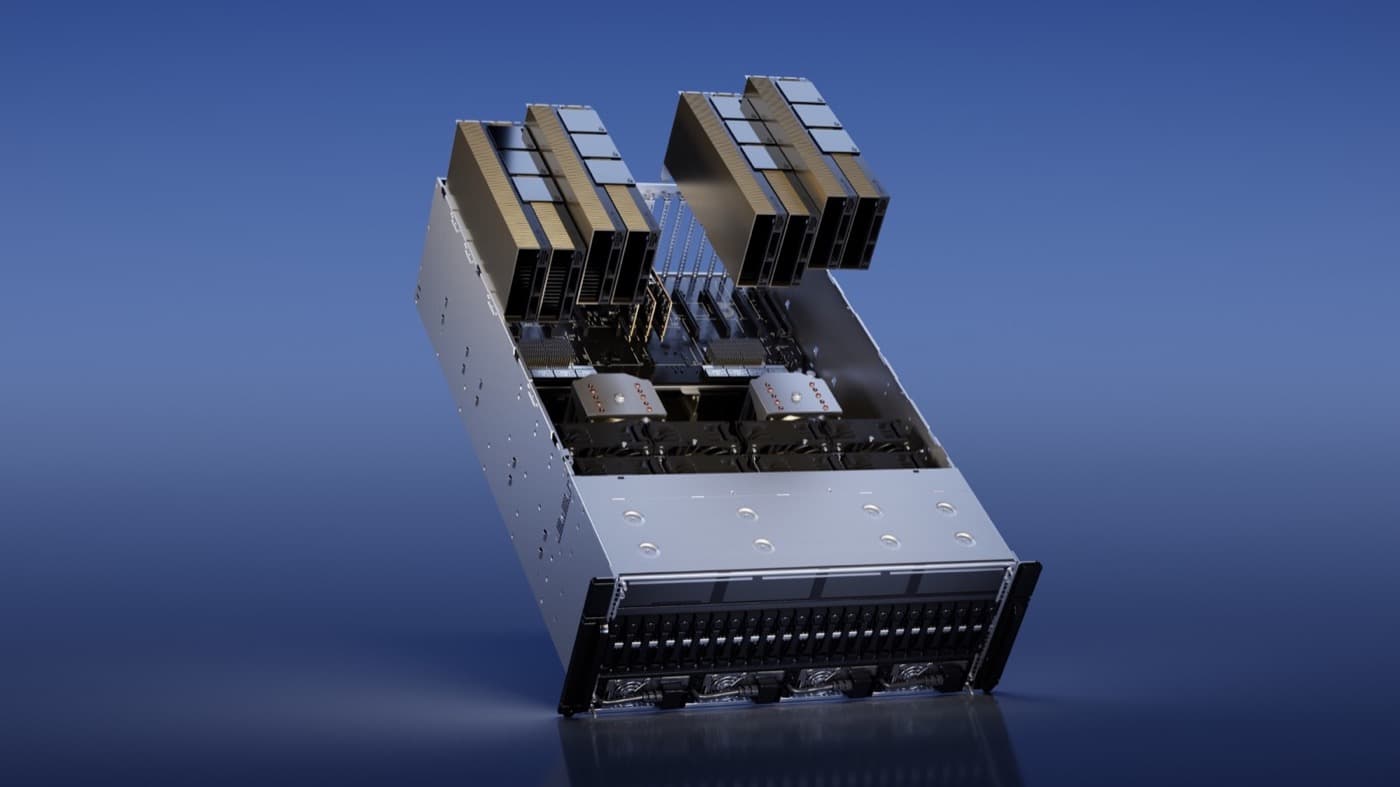
NVIDIA H100 NVL Tensor Core GPU
Dual-slot PCIe Hopper GPU with 94 GB HBM3 and NVLink bridge support for LLM inference