评测阅读约 2 分钟按所涉事件日期标注
Dell, HPE, Supermicro and Lenovo AI servers for the Rubin era
All four OEMs have announced Vera Rubin systems, nearly all liquid-cooled and arriving from late 2026 into 2027. Their Blackwell and RTX PRO servers are what can be deployed now.
提供英文和俄文版本。
InTechnologies
servers · ai-infrastructure · nvidia · data-centre
On 22 June 2026 Dell introduced the PowerEdge XE8812 at the ISC conference, the last of the four OEMs reviewed here to announce a Vera Rubin system. IT Brief reported that the XE8812 is built on NVIDIA’s Vera Rubin NVL4 design, scales to 144 GPUs per rack, uses direct liquid cooling for CPUs and GPUs, and sits in Dell’s PowerRack, an ORv3 rack rated for more than 300 kW. The report gave no shipping date.
HPE and Supermicro announced at GTC in March. According to NAND Research, HPE’s Vera Rubin NVL72 rack is due in December 2026, the HPE Compute XD700, built on HGX Rubin NVL8 with up to 128 Rubin GPUs per rack, in early 2027, and the Cray GX240 blade with up to 16 Vera CPUs during 2027. Supermicro’s release of 16 March described a 2U HGX Rubin NVL8 system, nine per rack for 72 GPUs, that supports Vera CPUs or next-generation AMD and Intel x86 processors, plus a 2U dual-Vera server with up to six RTX PRO 4500 Blackwell Server Edition GPUs. Supermicro called these systems upcoming and said its Blackwell systems were in full production.
Lenovo, also at GTC, described itself as a launch partner for Vera Rubin NVL72, offering liquid-cooled racks for hyperscale and sovereign AI clouds. StorageReview reported that its enterprise announcements centred on new inference-optimised ThinkSystem and ThinkEdge servers using RTX PRO 6000 and RTX PRO 4500 Blackwell Server Edition GPUs, a Blackwell Ultra platform for training and large-scale inference, and the ThinkStation P5 Gen 2 workstation with up to two RTX PRO 6000 Max-Q cards. No availability dates were given.
How the four compare
The differences are less about GPUs, which all come from the same NVIDIA designs, than about racks and cooling. Dell and Supermicro both build on ORv3-style liquid-cooled racks; Supermicro alone offers a liquid-to-air sidecar CDU that lets its HGX Rubin NVL8 run in a facility without facility water. HPE spreads its range from neo-cloud racks to supercomputing blades. Lenovo leans on RTX PRO servers for enterprise inference, built around GPUs that NVIDIA also offers in air-cooled versions. Supermicro’s release states that Vera Rubin platforms are fully liquid-cooled from this generation onwards.
What it means for buyers
Most Rubin systems from these OEMs are dated December 2026 or 2027, so projects due within two quarters should be specified on Blackwell systems or RTX PRO servers, which HPE and Supermicro describe as available now. Before requesting Rubin quotations, confirm rack standard (ORv3 or EIA 19-inch), power per rack, floor loading and whether facility water is available, since these decide which OEM designs are even possible. Ask each OEM for the support term, on-site service coverage in your country and spare-parts location, and for rails, power distribution and coolant distribution units to be quoted as line items. InTechnologies can source current Dell, HPE, Supermicro and Lenovo AI servers, subject to OEM allocation.
来源
- 01Dell launches PowerEdge XE8812 for AI supercomputing2026-06-22
- 02HPE: AI Factory & Storage Advancements (GTC 2026)2026-03-31
- 03Supermicro Reveals DCBBS with New NVIDIA Vera Rubin NVL72, HGX Rubin NVL8, and Vera CPU Systems2026-03-16
- 04Lenovo Expands Hybrid AI Advantage with NVIDIA at GTC 2026: New Inference Platforms, Workstations, and Rack-Scale AI Cloud2026-03-17
目录中的相关产品
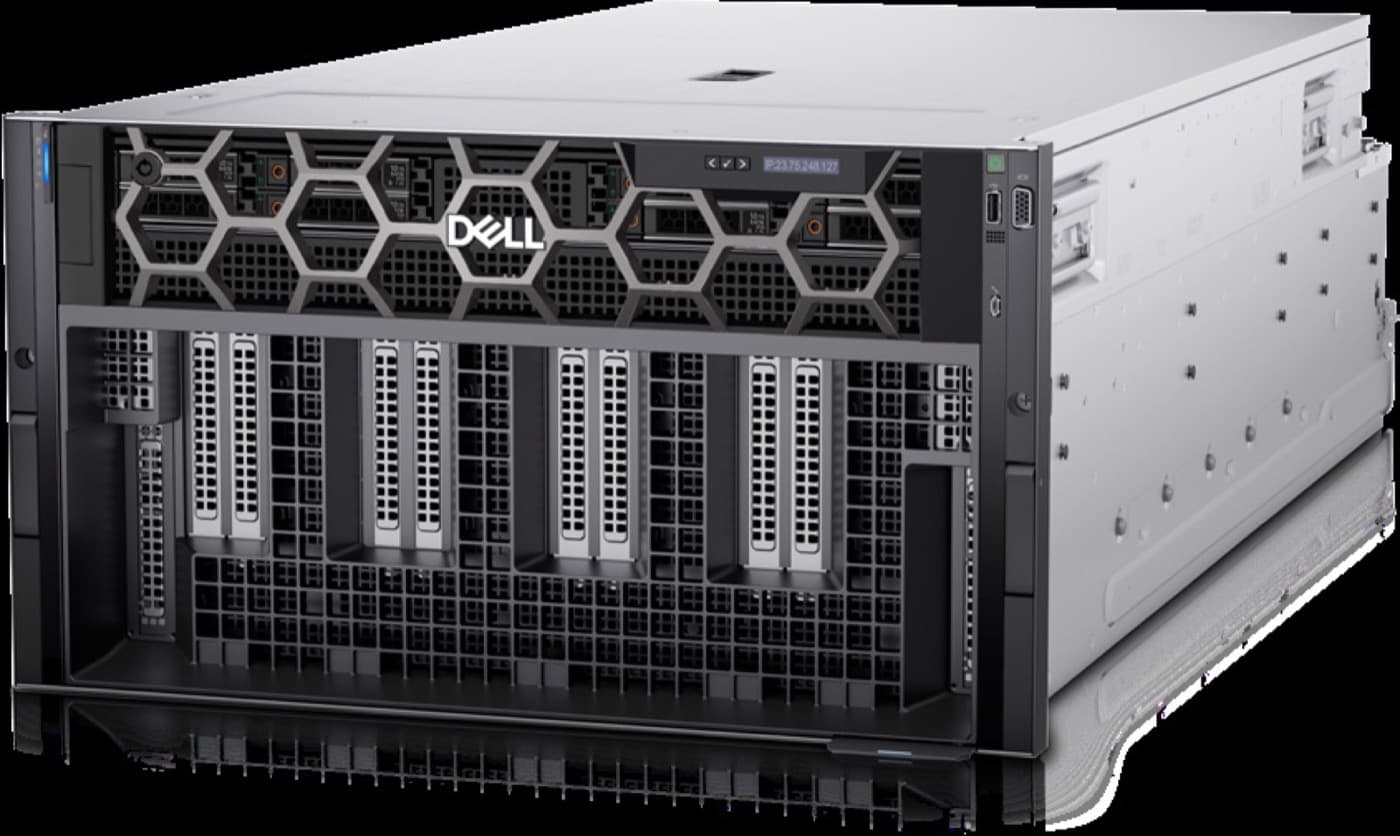
Dell PowerEdge XE9680 8-GPU AI 服务器
风冷 6U 八路 GPU 服务器,支持 NVIDIA HGX H100/H200、AMD MI300X 或 Intel Gaudi 3
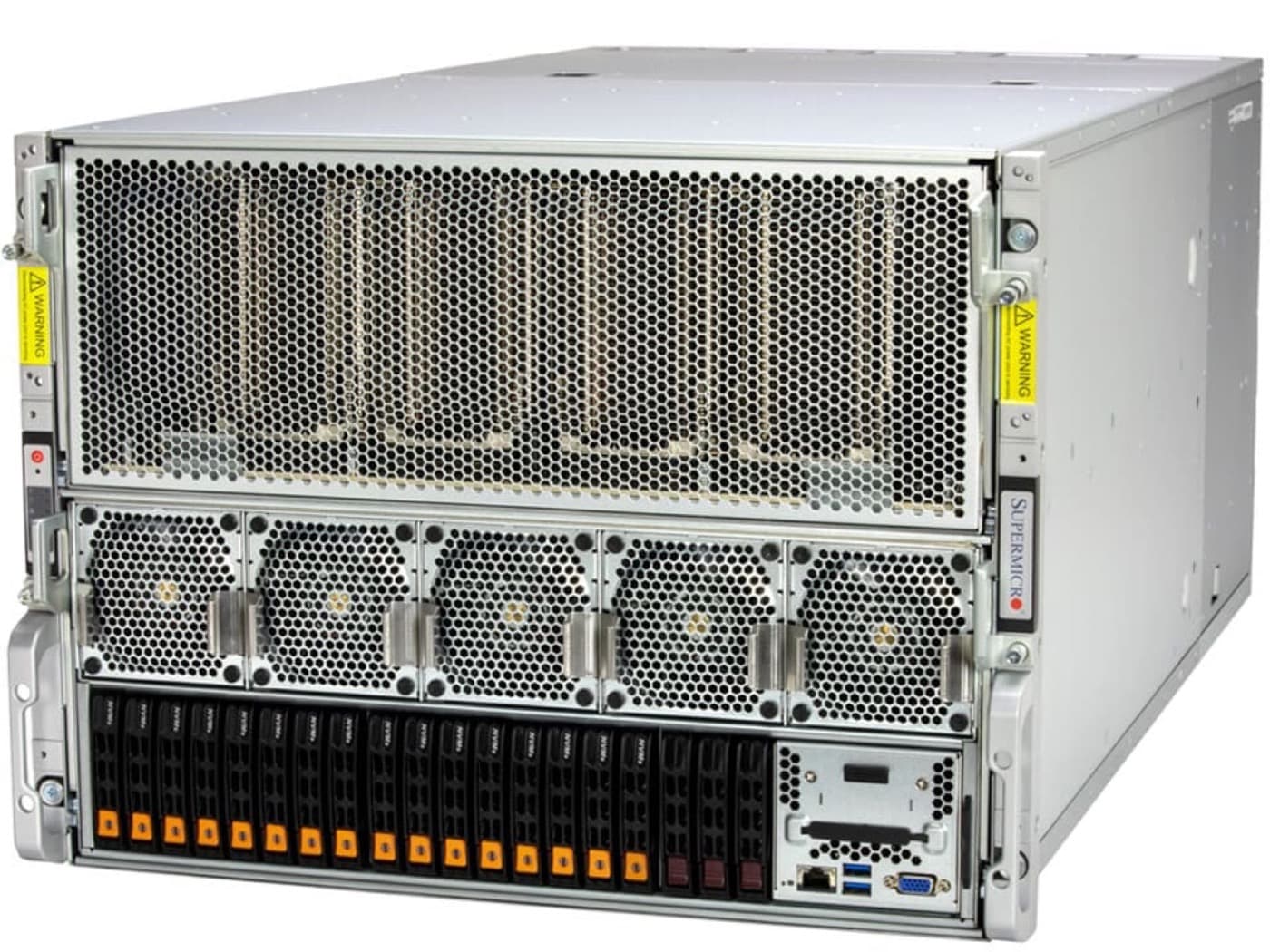
Supermicro SYS-821GE-TNHR 8U GPU 服务器
风冷 8U NVIDIA HGX H100/H200 8-GPU 系统,配备双路 Xeon 和 8 个 PCIe 5.0 网卡插槽