가이드5분 소요다루는 사건 기준 날짜
SXM vs PCIe: choosing the NVIDIA GPU form factor for training and inference
SXM GPUs sit on an HGX baseboard with full NVLink; PCIe cards fit standard servers with bridges or no NVLink at all. What changes in bandwidth, power, cooling and flexibility.
영어와 러시아어로 제공됩니다.
InTechnologies
gpu · nvidia · servers · data-centre
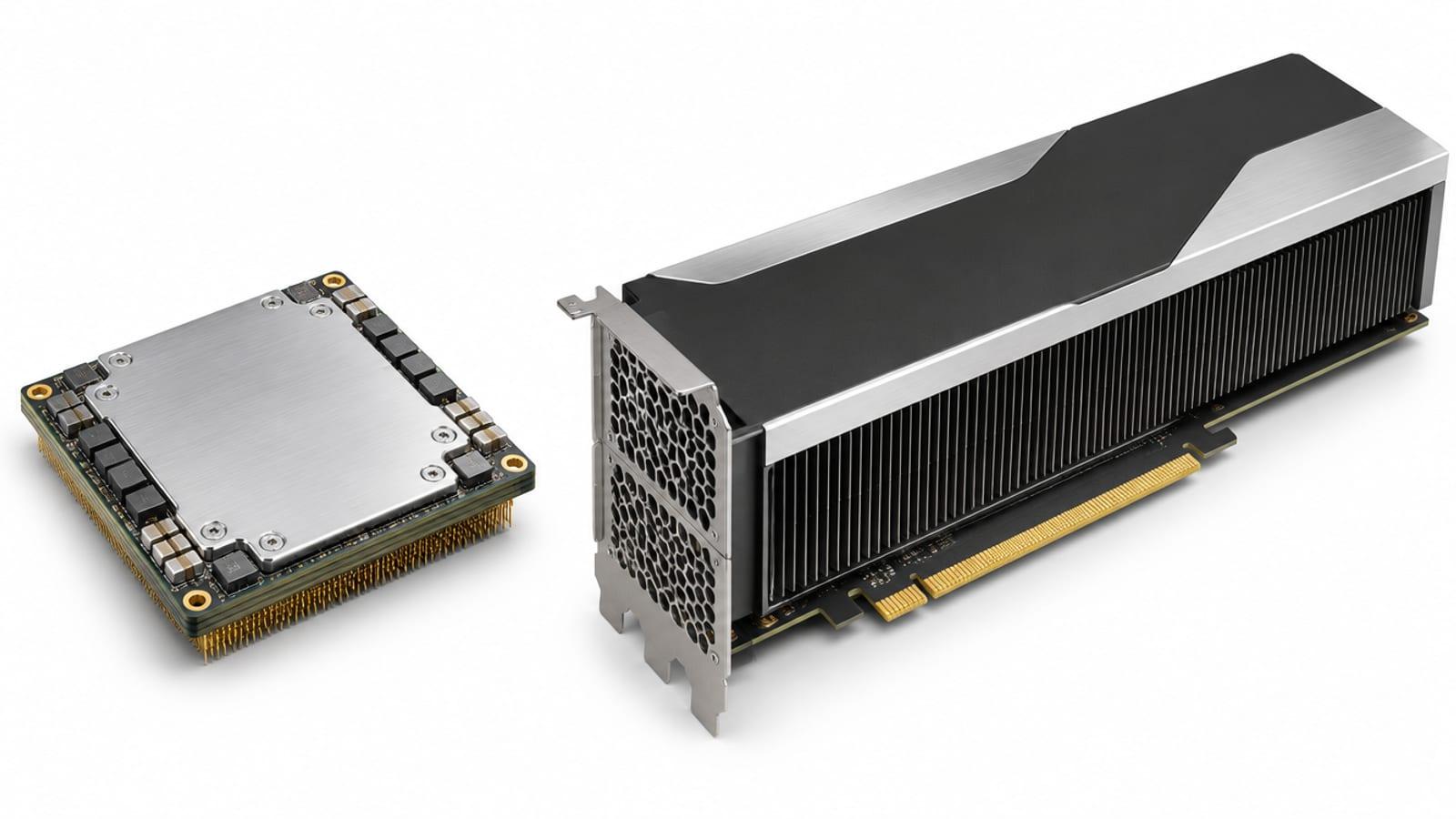
The same NVIDIA GPU name can describe two physically different products. An H200 SXM is a module soldered into a socket on an HGX baseboard; an H200 NVL is a dual-slot PCIe card that goes into a standard server slot. They share the chip and the memory capacity but differ in power, interconnect and the kind of server they need. A third option, the RTX PRO 6000 Blackwell Server Edition, is PCIe-only and built on a different memory type. This guide sets out the differences and how they map to workloads.
Two ways to mount a GPU
SXM is NVIDIA’s socketed module format. Eight SXM GPUs are mounted on one HGX baseboard together with NVLink Switch chips, and the board is built into a server designed around it, either by NVIDIA as DGX or by an OEM. NVIDIA lists the server options for H200 SXM as HGX H200 partner and NVIDIA-Certified Systems with four or eight GPUs. The baseboard, its power delivery and its cooling come as one unit, so the GPU count per server is fixed by the board.
PCIe cards plug into ordinary PCIe Gen 5 slots, which NVIDIA rates at 128 GB/s for H100 and H200. The H200 NVL is a dual-slot air-cooled card, and NVIDIA lists it in MGX partner and NVIDIA-Certified Systems with up to eight GPUs; the H100 NVL is listed for partner and certified systems with one to eight GPUs. That means a buyer can start with two cards in a standard 2U or 4U server and add more later, or mix GPU nodes with the same platform used elsewhere in the data centre.
NVLink: the biggest difference
In an HGX system every GPU reaches every other GPU over NVLink at full speed through the NVSwitch chips. NVIDIA rates H100 SXM and H200 SXM at 900 GB/s of NVLink per GPU, and HGX B200 and HGX B300 at 1.8 TB/s per GPU, 14.4 TB/s across the board.
PCIe cards use NVLink bridges instead. The H200 NVL supports two- or four-way NVLink bridges at 900 GB/s per GPU, but only between the cards that share a bridge; traffic between bridged groups, and to the rest of the server, goes over PCIe. NVIDIA rates the older H100 NVL at 600 GB/s of NVLink. The RTX PRO 6000 Blackwell Server Edition has no NVLink in NVIDIA’s specifications; its cards communicate over PCIe Gen 5.
This matters most when a model is split across GPUs. Tensor-parallel training and inference of models larger than one GPU’s memory exchange data between GPUs at every layer, and an all-to-all NVLink fabric keeps those exchanges fast across all eight GPUs. Workloads where each GPU, or each bridged pair, serves its own copy of a model barely use the interconnect.
Power, memory and compute
NVIDIA lists H200 SXM at up to 700 W and H200 NVL at up to 600 W, both configurable. Both carry 141 GB of HBM3e at 4.8 TB/s, so for H200 the memory is identical. The higher power budget shows up in compute: FP8 Tensor Core throughput with sparsity is 3,958 TFLOPS on H200 SXM against 3,341 TFLOPS on H200 NVL.
For Hopper’s first generation the gap was wider. H100 SXM is rated at up to 700 W with 80 GB at 3.35 TB/s; H100 NVL at 350–400 W with 94 GB at 3.9 TB/s. The PCIe card actually had more and faster memory, while the SXM module had more compute and faster NVLink.
The RTX PRO 6000 Blackwell Server Edition sits in a different category: 96 GB of GDDR7 with ECC at 1,597 GB/s, 4 PFLOPS of FP4, up to 600 W configurable, in a dual-slot air-cooled or single-slot liquid-cooled version. It also has four DisplayPort 2.1 outputs and splits into up to four isolated MIG instances, against up to seven on H200 SXM and H200 NVL.
Cooling and the server around the GPU
An eight-GPU SXM board concentrates heat in one place, and current Blackwell boards push servers towards liquid cooling: Supermicro, for example, fits HGX B300 into 4U with direct-to-chip cold plates and four 6,600 W power supplies, while NVIDIA rates DGX B300 at about 14 kW for the whole system. Air-cooled SXM servers exist but take more space: Supermicro’s air-cooled HGX B300 system is 8U with six 6,600 W supplies. PCIe cards spread the same heat across a chassis with ordinary airflow, and the H200 NVL and H100 NVL are air-cooled cards by design.
Software licensing can differ too. NVIDIA lists NVIDIA AI Enterprise as included with H100 NVL and H200 NVL, and as an add-on for H100 SXM and H200 SXM. Check the term with the supplier rather than assuming it.
Which form factor suits which workload
- Large-model training and fine-tuning across many GPUs: SXM on HGX. Full NVLink between all eight GPUs, plus the high-bandwidth cluster network that HGX B300 and B200 servers are built around, is what multi-node training needs.
- Inference of models that need more memory than two or four GPUs can hold: SXM, for the same reason.
- Inference of models that fit on one GPU or a bridged pair, retrieval and embedding services, and mixed AI and visual workloads: PCIe. H200 NVL gives HBM bandwidth in standard servers; RTX PRO 6000 Blackwell Server Edition adds graphics and video capability with 96 GB per card.
- Gradual expansion or limited facilities: PCIe, because cards can be added a few at a time into air-cooled servers that the site already supports.
Data-centre GPUs, including PCIe models, are subject to US export controls. InTechnologies supplies them through licensed partners, with end-user verification on every order.
What to specify in a request
- Form factor: SXM in an HGX server, or PCIe cards, and the exact GPU model (H200 SXM, H200 NVL, RTX PRO 6000 Blackwell Server Edition or other).
- For PCIe: number of cards per server, whether NVLink bridges are required and in two- or four-way groups, and the host server model if you already own one.
- For SXM: HGX board generation, OEM or DGX, CPU and memory, and cluster NIC type and speed.
- Cooling: air or liquid, and the power available per rack.
- Configured power limit if the GPUs will run below their maximum TDP.
- Software: whether NVIDIA AI Enterprise is expected to be included, and for which term.
- Workload description in a sentence (training, inference, model size), so the supplier can flag a form-factor mismatch before the quote.
출처
- 01NVIDIA H200 Tensor Core GPU2026-11-10
- 02NVIDIA H100 Tensor Core GPU2026-11-10
- 03NVIDIA RTX PRO 6000 Blackwell Server Edition2026-11-10
- 04NVIDIA HGX Platform2026-11-10
- 05NVIDIA DGX B3002026-11-10
- 06Supermicro AS -4126GS-NB3RT-LCC | 4U GPU Server2026-11-10
- 07Supermicro SYS-822GS-NB3RT | 8U GPU Server2026-11-10
카탈로그의 관련 제품
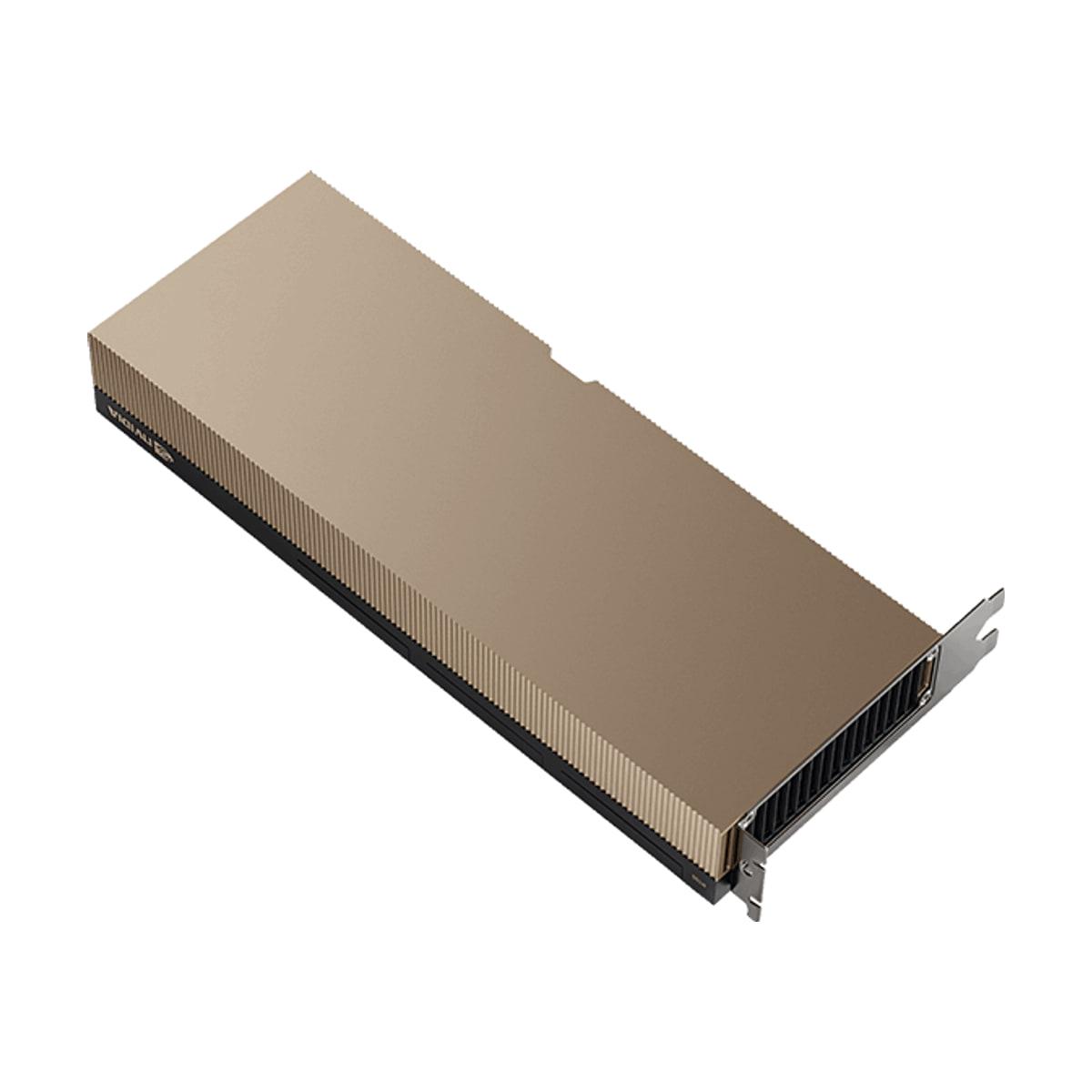
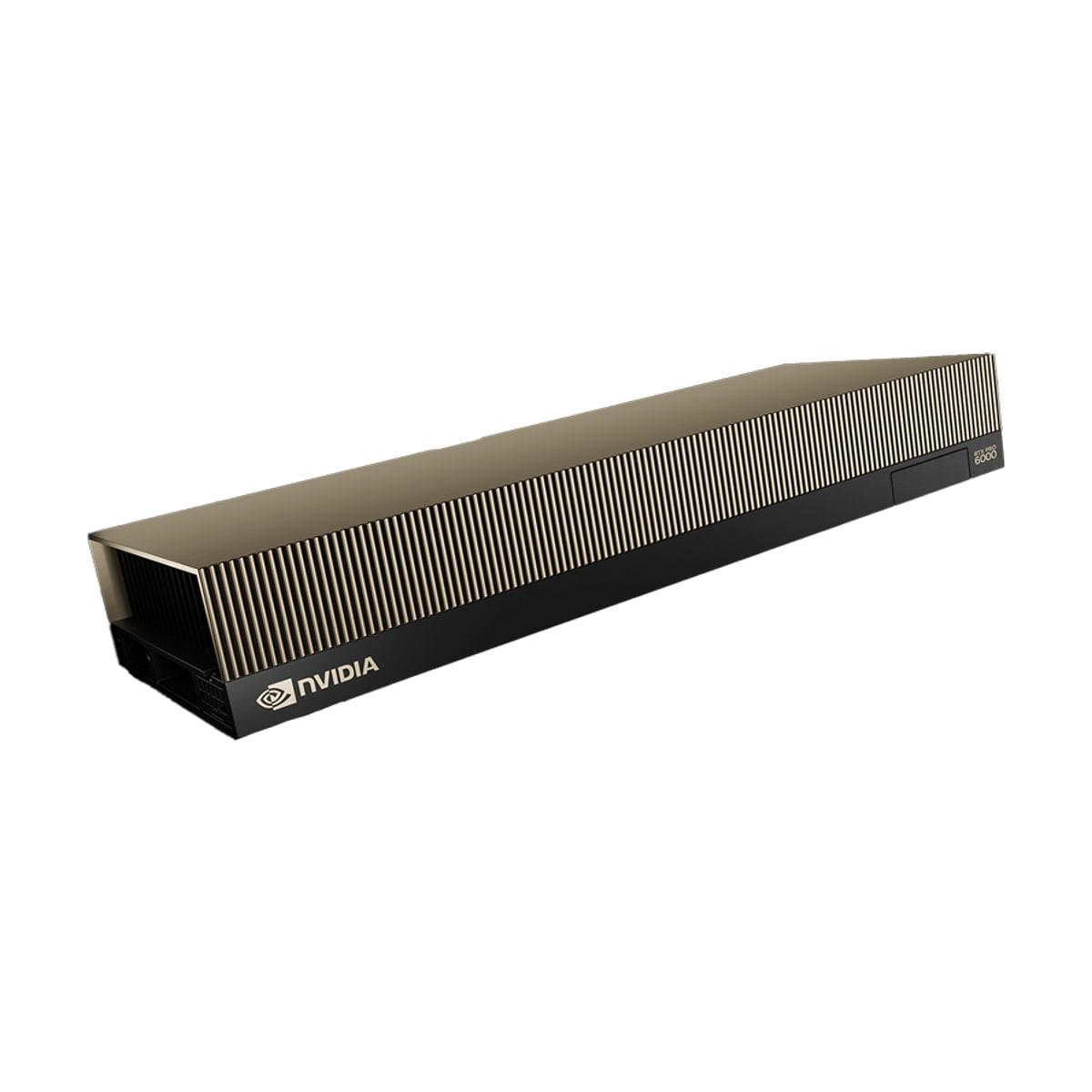
NVIDIA RTX PRO 6000 Blackwell Server Edition
서버 추론, 렌더링 및 vGPU를 위한 패시브 냉각 96 GB GDDR7 Blackwell GPU
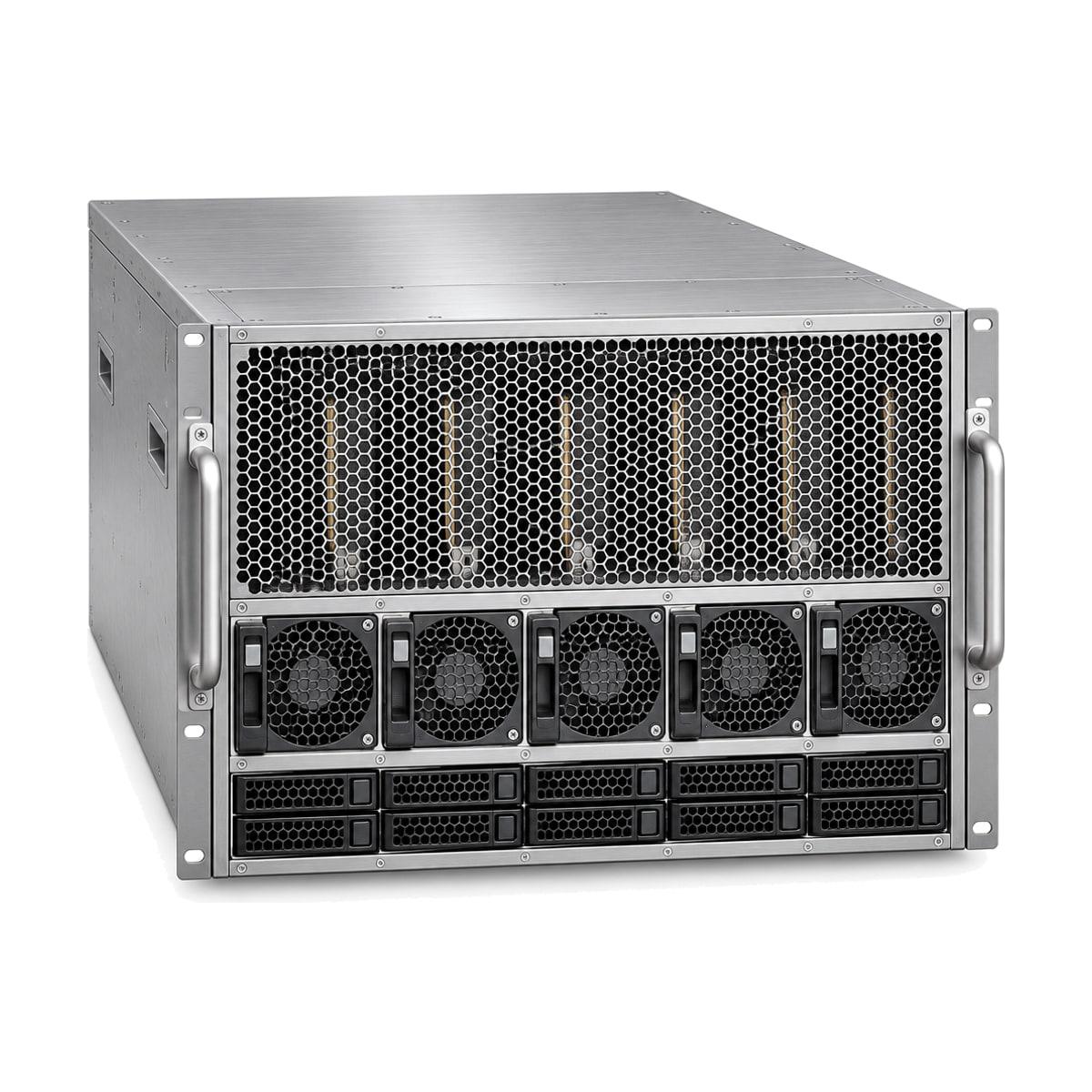
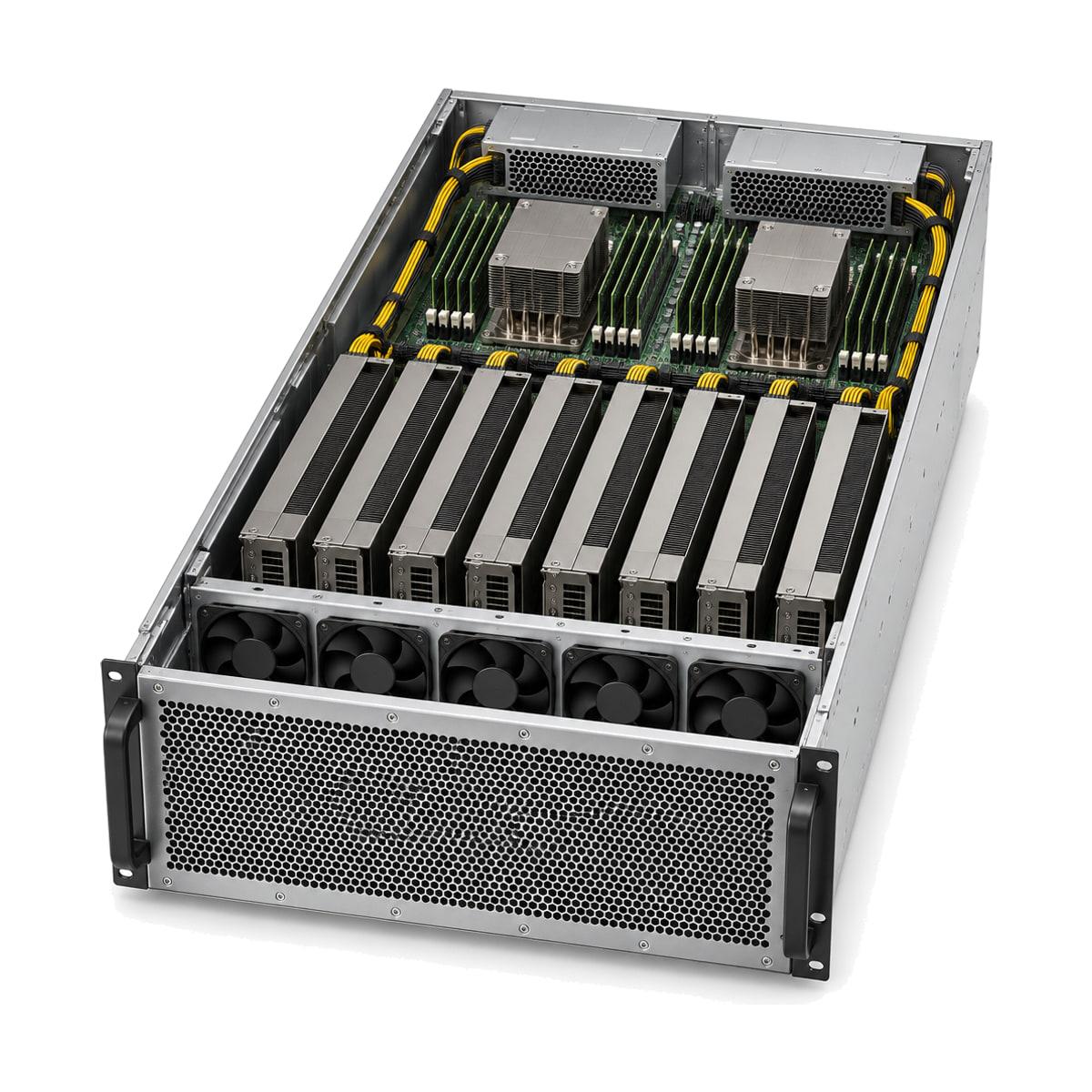
NVIDIA RTX PRO 6000 Blackwell Server Edition 96 GB 8기 탑재 서버
패시브 냉각 96 GB GDDR7 Blackwell PCIe GPU 8기, 총 768 GB; 섀시와 구성은 주문별 협의